Why West Orange, NJ Commercial Properties Need Professional Parking Lot Line Striping Every Year
The West Orange Property Owner's Guide to Parking Lot Line Striping: Compliance, Climate, and Durability
If you manage a commercial property in West Orange, New Jersey, your parking lot is doing far more work than most people realize. It handles hundreds of vehicle entries and exits every week, endures brutal freeze-thaw cycles each winter, and must meet a layered stack of local, state, and federal regulations year-round. Falling behind on maintenance is not just a cosmetic issue; it can mean fines, lawsuits, and expensive repaving bills.
AccuLines Line Striping has worked with property managers and business owners across Essex County, and the same handful of preventable problems come up time and again. This guide breaks down exactly what West Orange property owners need to know about keeping their lots striped, compliant, and built to last.
West Orange Has a Stricter Standard Than You Think
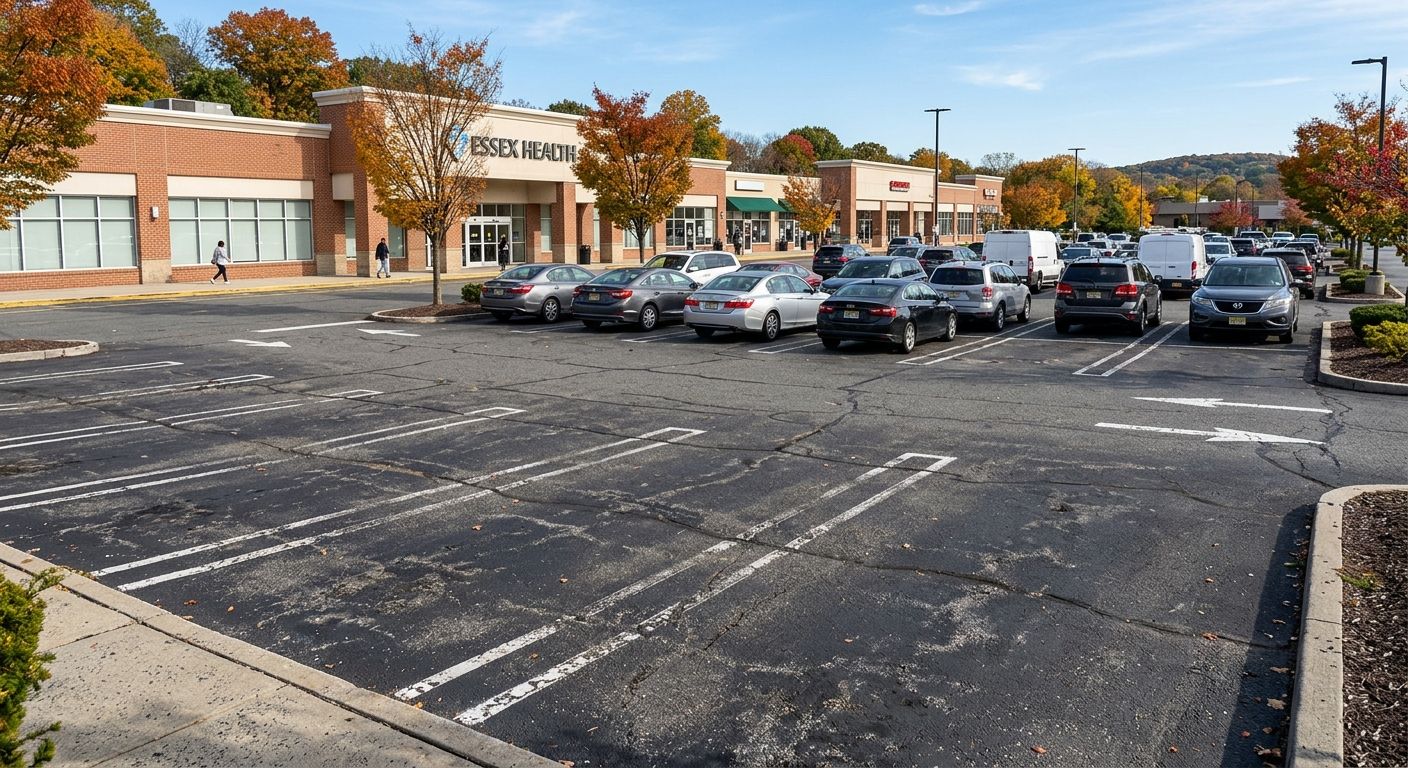
Most property owners assume parking lot restriping is something you do when the lines look faded. In West Orange and across much of Essex County, that assumption can cost you money. Local ordinances require commercial properties to undergo annual restriping to maintain public safety standards and clear traffic flow. Shopping centers with more than 50 parking spaces face even more specific requirements, including designated snow removal zones that must be clearly marked.
Skipping a year is not just a cosmetic risk; it puts you on the wrong side of municipal code. Violations can result in local fines, and those costs add up quickly when you consider that a professional restriping service is a fraction of the price of even a single citation. Scheduling
parking lot line striping in West Orange, NJ on an annual basis keeps you ahead of inspections and keeps your lot operating smoothly for customers and employees alike.
The NJ ADA "Penalty Sign" Rule Most Property Owners Miss
Federal ADA guidelines govern wheelchair symbol dimensions and accessible space layouts. But New Jersey's Barrier Free Subcode (N.J.A.C. 5:23-7) adds a layer of requirements that catches many commercial property owners off guard.
In New Jersey, every single accessible parking space must display an R7-8P penalty sign that explicitly lists local violation fines. The standard mounting height is 60 inches, but when the sign is mounted perpendicular to a sidewalk, New Jersey law requires that height to increase to 72 inches to prevent pedestrian head hazards. Non-compliance can result in a $250 fine per violation, and that figure applies per space.
Common compliance failures during inspections include faded blue surface paint, incorrect spacing between accessible stalls, and missing or improperly mounted R7-8P signs. These are not obscure technicalities; they are the specific items inspectors check. A professional striping contractor familiar with New Jersey's Barrier Free Subcode will account for all of these details so you are not left exposed to "drive-by" accessibility lawsuits or recurring municipal fines.
How the Freeze-Thaw Cycle Is Quietly Destroying Your Asphalt
West Orange sits in Northern New Jersey's climate zone, which means your pavement endures a punishing cycle every single year. Water seeps into micro-cracks and pores in unsealed asphalt. When temperatures drop, that water expands by approximately 9% upon freezing, forcing those cracks wider with every cycle. According to pavement research from the New Jersey Institute of Technology, repeated freeze-thaw cycles are the primary driver of rapid pavement deterioration, producing the potholes and crumbling surfaces that appear every spring across Essex County.
This is where regular striping connects directly to pavement longevity. Line striping is the final step in a complete preventative maintenance plan that includes crack filling and sealcoating. Sealing the surface before winter or immediately after the spring thaw prevents water from infiltrating the pavement structure in the first place. Property owners who treat striping as part of a proactive maintenance schedule, rather than a cosmetic afterthought, consistently spend far less over time by avoiding premature full-depth asphalt repaving.
Why Material Choice Matters More in North Jersey
Upgrade Your Property with Professional Pavement Markings
Not all parking lot paint performs equally, and Northern New Jersey's climate makes material selection especially critical. Standard water-based latex paint typically lasts only 12 to 18 months under local conditions. Between heavy traffic, aggressive snowplow blades, and salt and de-icing chemicals applied throughout winter, latex lines simply wear out too fast to stay compliant.
Property managers across the region are increasingly switching to more durable options:
- Hot-applied thermoplastic chemically bonds to the asphalt surface and typically lasts 3 to 5 years. It resists tire scrubbing and holds up well under plow blades.
- Epoxy coatings offer the longest lifespan, often 5 to 10 years, with strong resistance to chemical exposure and physical abrasion.
The upfront cost of these premium materials is higher than latex, but the return on investment is straightforward. Fewer reapplications, lower annual maintenance costs, and better year-round visibility all translate into real savings for property owners and managers.
FAQs
How often does West Orange require parking lot restriping for commercial properties?
West Orange ordinances require annual restriping for commercial properties to maintain visibility and public safety. Shopping centers with more than 50 spaces have additional requirements, including clearly marked snow removal zones.
What is the R7-8P sign and why does it matter in New Jersey?
The R7-8P is a penalty sign required at every ADA-accessible parking space in New Jersey under the state's Barrier Free Subcode. It must list applicable fines and be mounted at the correct height, which increases to 72 inches when perpendicular to a sidewalk. Missing or incorrect signs are a common cause of fines.
What is the best type of parking lot paint for New Jersey winters?
Hot-applied thermoplastic or epoxy coatings are the most durable choices for Northern New Jersey. Thermoplastic lasts 3 to 5 years and bonds directly to the asphalt, while epoxy can last 5 to 10 years. Both outperform standard latex paint significantly in cold-weather climates with heavy snowplow traffic.
When is the best time of year to restripe a parking lot in West Orange?
Late spring through early fall offers the best conditions for striping, with stable temperatures and dry pavement. However, striping immediately after the spring thaw is ideal for catching damage early and resealing surfaces before the next freeze cycle begins.
Can I be fined for faded parking lot lines?
Yes. In West Orange, faded or missing lines can result in municipal code violations. ADA-related striping failures carry their own separate fines under New Jersey state law. Staying on an annual maintenance schedule is the most effective way to avoid both.
Keeping your West Orange commercial property safe, compliant, and protected from the elements takes more than occasional touch-ups. It takes a local team that understands Essex County ordinances, New Jersey's ADA signage requirements, and the real-world demands of North Jersey winters. Call AccuLines at (973) 985-4582 to schedule your annual striping service and get ahead of inspection season.
Get a Free Parking Lot Striping Quote - Call (973) 985-4582
Recent Post